Popular
AI Prompt Library
Free AI Prompt Library for ChatGPT, Claude, Gemini & Mistral. Create expert SEO, marketing, coding, business, and social media prompts instantly with advanced prompt engineering templates.
Automation
Open Tool
Loading...
A strategic, config-driven checklist to guide your AI rollout. Covers Strategy, Data Foundation, Security/Ethics, and Execution across 18 expert items — with GDPR, SOC 2, and ISO 42001 standards built in.
Reviewed by AI & SaaS industry benchmarks · Updated for 2026
Personalise your checklist — items update instantly.
Your AI journey is just beginning. Focus on defining clear business objectives and assessing your data readiness before any tool selection.
Global Standards

Learn how small businesses are implementing AI in 2026 with practical workflows, ROI examples, automation strategies, and rollout frameworks.
Quick Answer
An AI Implementation Checklist is a 4-phase strategic framework covering Strategy, Data, Security, and Execution. In 2026, following a structured roadmap can significantly reduce deployment risks and ensures your business aligns with global regulations like the EU AI Act. Use the phased guide below to build your roadmap.
An AI implementation checklist is a structured framework that guides businesses through every critical decision, task, and milestone required to successfully deploy artificial intelligence. Unlike generic technology guides, a proper AI implementation checklist maps strategy, data readiness, security, compliance, and execution into a phased AI roadmap that teams can actually follow.
Most AI projects fail not because of bad technology — they fail because organisations skip foundational steps. A well-designed AI implementation checklist prevents those costly oversights by ensuring every team — from executive leadership to IT to legal — knows exactly what to do, when to do it, and why it matters.
Our checklist dynamically adjusts to your business sector, AI maturity level, and strategic goals. Whether you're a startup running your first AI experiment or an enterprise scaling multiple production models, you'll see exactly the tasks that matter most for your context — backed by Gartner, McKinsey, and BCG research.
This checklist is designed to be used interactively — not read passively. Start by selecting your business sector and AI maturity level using the configurator at the top of the page. The checklist will immediately filter and prioritise the tasks most relevant to your situation, removing items that don't apply and surfacing the critical actions you need to take first.
Work through each phase sequentially. Strategy and Alignment must come before Data Foundation — you cannot build reliable data pipelines without knowing what business outcome you are targeting. Security and Compliance must be addressed before Execution — retrofitting compliance after deployment is 5× more expensive and creates regulatory exposure. Use the expand toggles on each checklist item to access detailed guidance, templates, and research citations.
Set Your Context
Select your sector (Startup, SMB, or Enterprise) and AI maturity level (Exploring, Piloting, or Scaling). The checklist reconfigures instantly to show only relevant tasks.
Review Phase by Phase
Work through Strategy → Data → Security → Execution in order. Each phase unlocks the next. Do not skip ahead — dependencies between phases are intentional.
Expand for Guidance
Click any checklist item to expand detailed instructions, decision frameworks, and red flags. Each item links to the research source backing the recommendation.
Track & Download
Check off completed items as you progress. When ready, download your personalised roadmap PDF — formatted for board presentations and leadership reviews.
A successful AI deployment follows four distinct phases. Skipping or rushing any phase dramatically increases the risk of failure, regulatory exposure, or wasted investment. Use this AI roadmap as the backbone of your strategy.
The strategy phase is where most AI deployments are won or lost before a single model is trained. Your AI implementation must begin with measurable business objectives tied to P&L outcomes — not vague aspirations. Gartner reports that 85% of failed AI projects lacked a clear, quantified goal at inception.
Executive sponsorship is non-negotiable. McKinsey data shows that AI projects with active C-suite champions are 2.5× more likely to hit ROI targets. Alongside sponsorship, conduct an AI readiness assessment to audit your current data infrastructure, talent capability, and governance maturity before committing budget. Map all candidate use cases against business priorities using an impact–feasibility matrix, and prioritise 90-day proof-of-concept projects to build momentum.
AI quality is determined entirely by data quality. Before any model training or vendor onboarding, your AI implementation checklist must address data auditing, quality pipelines, governance, and privacy controls — in that order.
Forrester research found that 73% of enterprise data goes unused in analytics and AI. A thorough data audit typically reveals that 40–60% of the data required for priority use cases already exists within the organisation — just fragmented across siloed systems. IBM estimates poor data quality costs businesses $12.9M per year. Building clean, governed data pipelines before model training is 10× cheaper than fixing data problems post-deployment. GDPR compliance, consent management, and data minimisation must be embedded at this stage — not retrofitted later.
Responsible AI deployment requires proactive security and compliance — not reactive patching. This phase of your AI implementation covers AI-specific threat modelling (adversarial attacks, prompt injection, data poisoning), model fairness and bias testing, explainability requirements, and human-in-the-loop oversight mechanisms.
The EU AI Act (effective 2026) mandates documented accountability chains, conformity assessments, and human oversight for high-risk AI systems. GDPR Article 22 requires explainability for automated decisions. SOC 2 Type II increasingly audits AI trust criteria. Vendor due diligence — covering Data Processing Addenda, sub-processor disclosure, and model provenance documentation — must be completed before any third-party AI API is integrated into production systems.
The execution phase transforms your AI strategy into measurable production impact. Effective AI deployment requires MLOps infrastructure for model versioning, monitoring, and CI/CD pipelines — teams with mature MLOps practices deploy models 6× faster and experience 3× fewer production incidents (Google DORA).
Change management is equally critical. PwC research shows 54% of employees fear job displacement from AI. Proactive reskilling programmes and transparent communication increase adoption rates by up to 60%. Finally, commit to a formal ROI measurement framework from day one. BCG reports only 22% of organisations formally measure AI ROI — yet it's the only way to justify continued investment and course-correct underperforming models before they become expensive liabilities.
One of the most common planning failures in AI projects is underestimating timeline. Vendor demos make AI deployment look effortless — the reality involves data preparation, security reviews, staff training, and iterative testing. Use these benchmarks to set realistic expectations with stakeholders before project kickoff.
| Phase | Startup | SMB | Enterprise |
|---|---|---|---|
| Strategy & Alignment | 2–3 weeks | 4–6 weeks | 6–12 weeks |
| Data Foundation | 3–4 weeks | 6–10 weeks | 3–6 months |
| Security & Compliance | 1–2 weeks | 3–5 weeks | 2–4 months |
| Execution & Pilot | 4–6 weeks | 6–10 weeks | 3–6 months |
| Scale & Optimise | Ongoing | Ongoing | Ongoing |
Timelines assume dedicated internal resources. Add 30–50% buffer for organisations with limited AI experience or complex legacy systems.
Understanding the realistic cost structure of AI implementation is essential for building a defensible business case. AI projects are frequently underbudgeted because decision-makers focus on software licensing costs and ignore the hidden costs of data preparation, change management, and ongoing model maintenance.
According to Deloitte's 2025 State of AI in the Enterprise report, the average mid-market AI initiative costs between $150,000 and $500,000 in year one — with 60–70% of that budget consumed by data work, not model development. However, well-executed AI deployments consistently deliver 3–5× ROI within 24 months, with operational efficiency gains averaging 25–40% in automated process areas.
💰
Typical Year-1 Cost
⏱️
Average Time to First ROI
📈
Expected 3-Year ROI
210% ROI
A 15-person SaaS startup used this checklist to prioritize AI support automation. By starting with a 90-day proof-of-concept, they achieved strong positive ROI in year one before scaling to other use cases.
65% Time Saved
A 200-person firm identified siloed data across 5 systems using this roadmap. Post-launch, proposal creation time dropped by 65% and win rates improved by 18% due to data-driven pricing.
€15M Risk Prevented
A global bank navigated EU AI Act & GDPR requirements using the checklist. A 4-month compliance phase prevented regulatory actions estimated at €15M+.
This AI implementation checklist is designed for decision-makers and technical leads responsible for AI strategy: Chief Technology Officers evaluating their organisation's AI readiness, Operations Directors building business cases for AI investment, Data Engineering teams preparing infrastructure for production models, Compliance Officers navigating GDPR, SOC 2, and EU AI Act requirements, and Founders building their first AI-powered product. If you are responsible for any aspect of an AI deployment — from initial strategy through to production scale — this checklist provides the structure, research-backed guidance, and global compliance standards you need to deploy AI responsibly and profitably.
Implementation is incomplete without cost control. Now that you have the roadmap, ensure your core systems are cost-efficient. Calculate your CRM Total Cost of Ownership (TCO) to prevent budget leakage.
AI deployment is not a technology problem — it's an organisational transformation. The businesses that succeed with AI in 2026 and beyond will not be those with the biggest budgets or the most sophisticated models. They will be the ones that built strategic clarity, data governance, ethical guardrails, and measurement frameworks before writing a single line of production code.
This AI implementation checklist gives you the structure to do exactly that. Work through each phase at your own pace, expand items for expert guidance, and download your personalised roadmap PDF when you're ready to present your AI strategy to leadership or your board.
Start with the configurator above. Set your sector and maturity level. Your personalised AI roadmap updates instantly — no sign-up required.
Gartner
85%
of failed AI projects lacked a measurable business objective at inception.
McKinsey
2.5×
more likely to hit ROI targets when AI projects have active C-suite sponsorship.
BCG
22%
of organisations formally measure AI ROI — despite it being essential for sustained investment.
Disclaimer: This checklist is based on publicly available industry frameworks including the McKinsey AI Readiness Assessment, Gartner AI Maturity Model, BCG AI Adoption Survey, NIST AI Risk Management Framework, ISO 42001, EU AI Act, and GDPR guidelines. It is intended as a structured starting point for AI strategy discussions and should be supplemented with advice from qualified legal, compliance, and technical professionals for your specific regulatory context.
Techaigoz Research Hub
AI Strategy & Implementation · TechAiGoz.com · 2026 Edition
Free AI Prompt Library for ChatGPT, Claude, Gemini & Mistral. Create expert SEO, marketing, coding, business, and social media prompts instantly with advanced prompt engineering templates.

Calculate the real return on investment before adopting any AI tool. Enter your costs and time savings to get an instant ROI breakdown.
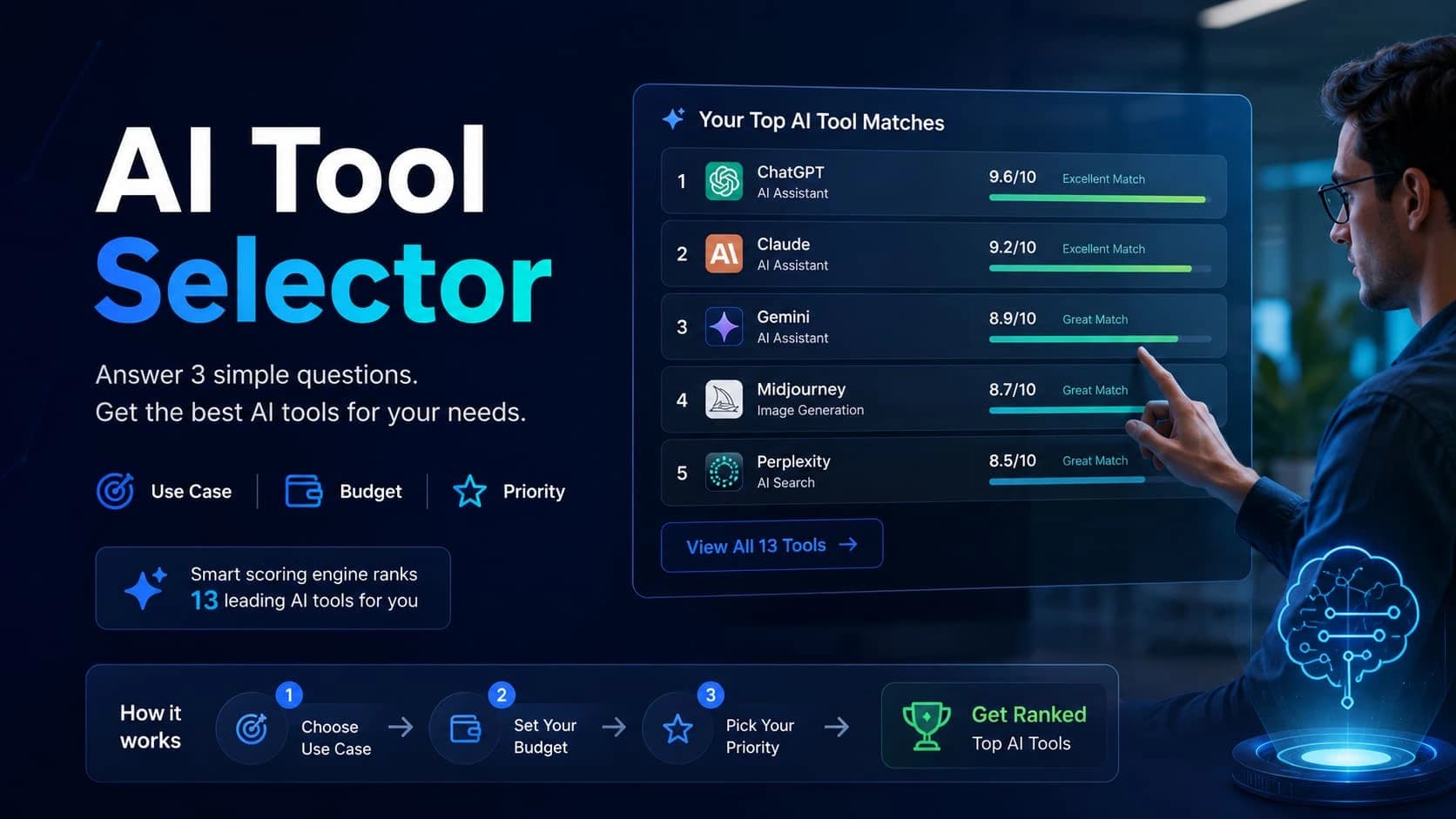
Answer 3 quick questions and our scoring engine instantly ranks the best AI tools for your use case, budget, and priorities — from 13 leading tools in 2026.